Tag Archives: Turkish cookery

Thanksgiving turkey Ottoman style

screen-shot-2016-11-23-at-15-13-51Just in time for Thanksgiving, here’s a gentle Ottoman twist on the festive dinner – Yashim’s spiced stuffing, made with rice. Funnily enough, Ottomans seldom emigrated to the United States (an exception was a Syrian, Hadji Ali, aka Hi Jolly, who set up a camel corps for the Confederates during the Civil War), otherwise this stuffing would have delighted them. 

The recipe is below. You will of course find lots more recipes in YASHIM COOKS ISTANBUL, out now.

Signed first editions of Yashim’s new book are available at http://bit.ly/2c7fkIU postage free. Also on sale on Amazon or a good bookstore!

screen-shot-2016-11-23-at-15-19-39

Yashim Cooks Istanbul Storms US Charts!

You may imagine how thrilled I was to wake up to a fabulous piece about Yashim’s cook book on America’s number one radio show, Morning Edition. They gave it the great title: “Popular Detective Series Gets Its Own Cookbook” which is succinct, accurate and somehow funny. Very professional.

We did the interview about a month back, with Mary Louise Kelly of NPR, in my sister’s kitchen in London. Garlic, pumpkin AND fuzzy microphone.

jasoncooks

The interview isn’t without its own drama, either – do listen to the 4 minute broadcast (and check out a few recipes) via this link:

http://www.npr.org/sections/thesalt/2016/11/15/501588281/assassins-steak-tartare-popular-detective-series-gets-its-own-cookbook

Anyway, it’s a really generous launch present and immediately sent the book skimming up the Amazon rankings into the top 300: heady stuff for a 19th century Ottoman sleuth. Best of all, though, is the feedback from people who have started cooking from the book.

Signed copies are still available via this link: http://bit.ly/2c7fkIU and we’ll be using an express route to ship to the States, too.

Yashim Steps Out

I’m told that tickets for my first Yashim Cooks Istanbul gig have sold out, which has to be good news. Although I remember being told the same thing by the nice people at Faber at the launch party for The Janissary Tree, and wondering if publishers lived on the same planet as the rest of us.

Picture the scene: I assemble a hundred or so of my closest friends and relations, along with the great and the good of Fleet Street, Grub Street and the BBC, hire splendid Georgian rooms in Fitzroy Square, lay on everlasting fizz, engage professional belly dancers, no less – and half an hour into the jamboree the publishers come up smiling and rubbing their hands to tell me ‘We’ve sold out of books! Congratulations!’

Sold out! Jolly well done!

Sold out! Jolly well done!

Anyway, no more tickets for November 12th at the Bridport Literary Festival: but we have other things planned for later, elsewhere.

If anyone wants to pre-order Yashim Cooks Istanbul, you can get signed copies here, free of postage. Also you can pre-order them on Amazon in the UK for £19.99, although they won’t be signed. I expect Amazon.com in the US will offer something similar very soon. Yashim Cooks Istanbul makes a really good present, with a whiff of Ottoman spice.

Many of you have asked when Yashim will emerge from his retirement and engage in a new adventure. Well, he has one rather short adventure chronicled in a collection of stories entitled SUNSHINE NOIR, all mystery stories by crime writers who eschew the frigid wastes of Scandinavia in favour of southerly heat and sweat (not but that it usually snows in Istanbul, but we will let that pass). My story is called Chronos and Kairos, about an occasion when Yashim borrowed a watch. Some of you may remember young Compston, of the British Embassy in Istanbul, bleating about his father’s Hunter in An Evil Eye: it’s that watch. Different occasion.

510z06ugbil

Print editions are on their way, apparently, but if you use Kindle then it’s available there already.

Mindfulness, Ottoman style?

IMG_2953

The Ottomans, being meritocrats who rewarded talent over accidents of birth, were naturally keen on self-improvement. If you entered palace service, you were educated formally at first, and then expected to carry on improving your skills and learning new ones. By the end, if you were good, you were in a position to handle the demands of high office. You might even make it to Grand Vizier.

I shall never make vizier, but I approve of the Ottoman attitude to self-improvement. We all try to get better at what we do, and perhaps we should try to get better at things we don’t do, too, or didn’t until now. This year I set aside my books and learned how to restore an ancient house, how to write a screenplay using Final Draft and how to take photographs, principally of food. As many of you will know from your own experience, the effort proved enjoyable, and worthwhile.

I needed beautiful pictures to illustrate Yashim’s Istanbul Cook Book, for which many of you have already kindly tested recipes. I do have beautiful pictures of Ottoman Istanbul, with old maps, illustrations and engravings, to accompany the text and help evoke the atmosphere of Yashim’s Istanbul. I have lovely photographs of the modern city, its markets, ferries, domes and shops, to forge the link between Yashim’s time and our own. That leaves only the dishes themselves to be portrayed, hinting at their excellence.

IMG_3077

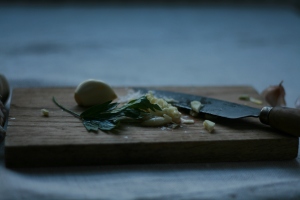
Advised by a website called thewoksoflife I bought a new sort of lens, and took estimable advice and instruction available on the internet. Bearded professionals revealed some of the secrets of their craft on YouTube, camera buffs on chatrooms discussed the virtues of RAW and jpeg, and bloggers, in Manhattan lofts as in Cornish villages, showed off their cooking and photographic skills. Absorbing all this, I realised it came down to: the right lens, and the right sort of light. The right lens makes the background blur, which we photographers call bokeh, and the right light is daylight.

IMG_3331

After that, all you need is delicious food, charming surfaces, acceptable crockery, table cloths, clean spoons, salt cellars and small bowls, a scattering of fresh parsley from your garden and a tripod, for which sometimes a box will serve. You also need a reflector, to chase away shadows. I was told I needed tweezers, too, for arranging salad leaves, but I skipped that. I relied on opposable thumbs.

IMG_3029

Above all you need to get your food ready while it is still light, and you need to eat something yourself before you set it all out, otherwise you get hasty. And greedy.
IMG_3010

Patience is absolute. Remember Mustafa the Soup Master in The Janissary Tree?

“As for himself, he thought, patience was his second skin. How could he have lived his life, and not acquired patience in positively redemptive quantities?”


Yashim’s fantastic chefs!

A few days ago I sent out a call for people who might enjoy testing the recipes for Yashim’s Istanbul Cook Book. Are the instructions clear? Is the result scrumptious? Are you transported by a touch of heat and cumin seed to the shores of the Bosphorus?

A page from Yashim's Istanbul Cook Book
A page from Yashim’s Istanbul Cook Book

The response has been fabulous – I’m incredibly grateful to everyone who got in touch at [email protected]. People are road-testing these Ottoman dishes all over the world, from Pakistan to Wisconsin, Estonia to Washington DC (hello to the Culinary Historians of Washington: CHoW!), which makes it a lovely peaceful international effort. To all those who have been in touch, a big thank you for taking part.

I’ve asked Jillian’s permission to include this great photo of a soup – she was the first to send it in. Great saucepan (and I like the book getting a light grilling, too)!

Widow Matalya's Chicken Soup - with a pleasantly battered copy of Yashim's fourth adventure!
Widow Matalya’s Chicken Soup – with a pleasantly battered copy of Yashim’s fourth adventure!

As far as I know, there are no representatives of the southern hemisphere involved yet – but I have a number of recipes yet to check over, so if there are any Aussies out there, give us a shout! And do pass the email [email protected] around to your friends if they fancy getting a recipe to try: I’m not planning to close the hatch until Wednesday evening, February 4th.

Peasant bread - made with a traditional chickpea starter

Peasant bread – made with a traditional chickpea starter

You might like to know this, taken from the introduction to Yashim’s Istanbul Cook Book:

Most of the ingredients need no further introduction but there are a few spices which may be worth tracking down online or at a likely grocery shop.

I use two kinds of chilli pepper. Pul biber is hot chilli, in flakes or powder – like paprika or cayenne, the more you add the hotter the dish. Isot, or Urfa, biber, is a more subtle creature, darker in colour, made from Urfa red peppers that darken as they grow to deep purple. They are dried in the sun by day and wrapped up at night, the better to concentrate their flavour, which is slightly smoky, slightly sweet, and deliciously warm.

In the Spice Market and elsewhere you want to buy pepper in dry rustling flakes – vendors sometimes add salt and oil to make the mix richer and heavier. Nothing to worry about, just good to know. And powder will contain the seeds, while flakes are all flesh.

Sumac is now thoroughly available, made from a berry with a curiously good lemony and slightly sour taste.

A word on measures and quantities. Most of these recipes specify precise quantities, but we would do well to bear in mind the advice offered to a French chef sent into the kitchens by the Empress Eugenie, the consort of Napoleon III, when the imperial couple made a state visit to Istanbul in 1873. The quote is from my  Lords of the Horizons: A History of the Ottoman Empire.

 ‘The French emperor Napoleon III and his empress, Eugenie, spent a week in Istanbul as the Sultan’s guests in 1862. The Empress was so taken with a concoction of aubergine puree and lamb that she asked for permission to send her own chef to the kitchens to study the recipe. The request was graciously granted by their host, and the chef duly set off with his scales and notebook. The Sultan’s cook slung him out, roaring, ‘An imperial chef cooks with his feelings, his eyes, and his nose!’

Afiyet olsun!


YASHIM’S ISTANBUL COOK BOOK – a call for volunteers!

As you probably already know, Yashim the Investigator – the hero of my series of five mystery novels – is something of a cook. In an idle hour in his apartment in Balat, Istanbul, he will chop and simmer and stir and sprinkle, and rustle up some delicious meze, perhaps, or a grand main dish, all the while thinking about the case he’s on. It’s how he relaxes. It’s how he thinks. Sometimes it gives him a clue…

tursu01

The books are full of recipes, and I hope they evoke the atmosphere of 19th century Istanbul – the way it looked, how it smelled, and what it all tasted like. For ages, people have been suggesting that I, the humble author, gather all Yashim’s recipes, and some more, together in one place – and I am pleased to say I’ve done it. Including baklava, of course.

Yashim’s Istanbul Cook Book is on its way.

cookbook page1

It has dozens of authentic recipes for sauces and fish, for grills and breads, for vegetables and kebabs (and pickles, like those being sold by the guys above): Istanbul the year round! And we’ve dropped in passages from the novels, too, to go with them, and lots of fabulous illustrations.

fountin ahmed III

The book has been designed by Clive Crook, the Art Director of Cornucopia Magazine, so it’s gorgeous as well as delicious.It’s being published in July.

Right now I’m looking for volunteers to road-test a recipe.Send me your email address (to the email address below), and I’ll send you a recipe from the book.

I’ve cooked them all, again and again, but I badly want to know what your experience of following the recipe was like. Did it work? Were the quantities right for you? Were the instructions clear, or did they leave you furiously backpedalling while you ground the forgotten spices and the onions burned?!

A quick ‘It worked’ is all I need (though please don’t stint if you’d rather say more), and a pointer to what, if anything, seemed wrong. I’m hoping there’ll be no complaints but I’d rather discover that now than go to press with anything that isn’t 100% perfect.

By all means tell a friend, if you think they’d like to join in. Ask them to drop me a line here, and I’ll send them a recipe to try. Who knows – you could end up having an Ottoman feast!

Get in touch at [email protected]

Who’s Who in Yashim’s Istanbul

We must begin with the sleuth himself, of course. Yashim is as old as the 19th century, thirty six years old when he makes his first appearance in The Janissary Tree. He is the sultan’s confidential agent, or tebdil khasseky, in succession to Fevzi Ahmed – of whom much more in An Evil Eye (Yashim No. 4). Unlike Fevzi Ahmed, Yashim can visit anywhere and talk to anyone in Istanbul… for Yashim is a eunuch. Although he can make love, he will never father children.

You want to know how that works? Then you need to read Yashim No. 5, The Baklava Club. I’m afraid that’s all the explanation I can give you here.

I don’t want to press the eunuch theme (which makes some men cross their legs), but it is a metaphor for Yashim’s role as a sleuth. All through history, eunuchs were created to serve in the palace bureaucracy – it’s true for imperial China, and ancient Persia, as for the Byzantines and their successors, the Ottomans. Without family, their interests were allied with the ruler’s own ambitions and desires, making them men a ruler could safely trust.

The Byzantines are thought to have modelled their representations of angels on eunuchs: chaste, and intercessionary, passing between the divine and the sublunary world. Above all, their role is to serve.

Angel from a mosaic in La Matorana, a Byzantine church in Palermo

Angel from a mosaic in La Matorana, a Byzantine church in Palermo

So Yashim, too, serves his sultan, and the people, and the requirements of justice.

He is also a fabulous cook, preparing the Thursday night dinner for his old friend Count Palewski, Polish ambassador to the Porte, as the Ottoman court was called. He draws on the full repetoire of Ottoman Turkish dishes, many of them first elucidated in the kitchens of Topkapi Palace, where Yashim was trained. It’s this palace tradition that allows Turkish cookery to be ranked as one of the three great classical cuisines of the world. The other two are French and Chinese.

Chimneys of the kitchens at Topkapi

Chimneys of the kitchens at Topkapi

Turkish buns

Turkish buns

Yashim has been well-trained. He has worked in the palace, and out of it, for a Greek merchant. He speaks many languages, and reads voraciously – French novels are a favourite, passed to him by the Valide, the Queen Mother, of whom more in a subsequent post!

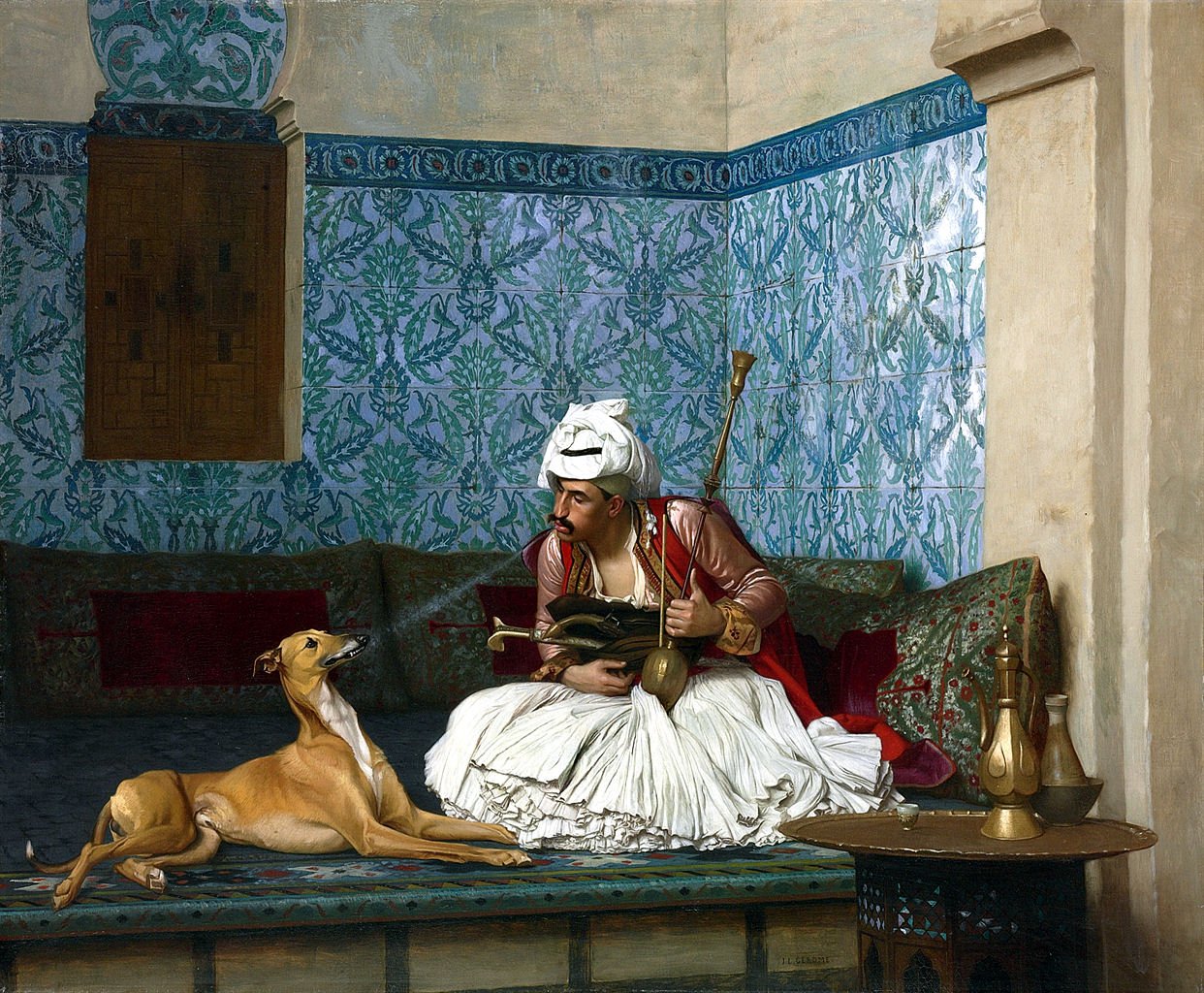
Jean Leon Gerome's finest work - Arnaut and his dog.

Jean Leon Gerome’s finest work – Arnaut and his dog.