Tag Archives: The Bellini Card

The Ottoman Nose

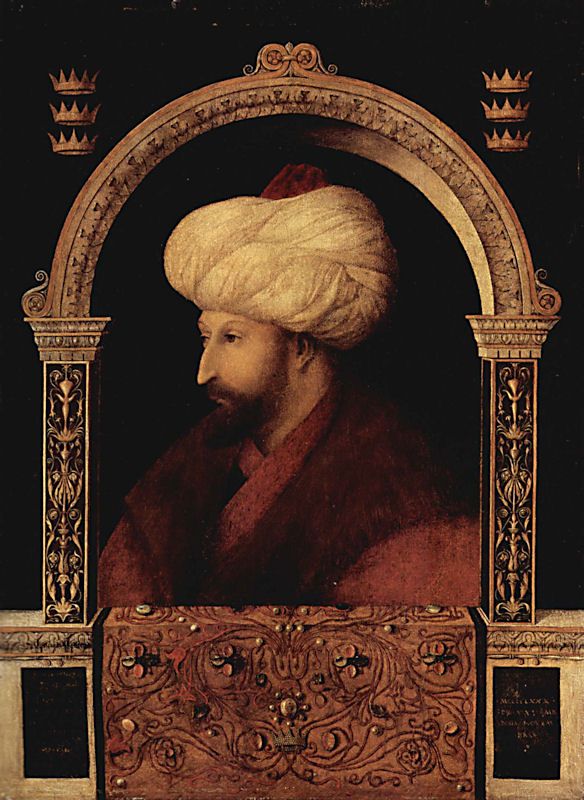
Many of you will recognise this portrait of Mehmed II, the conqueror, who beseiged and took Constantinople in 1453, bringing the story of imperial Rome to its bitter end.

Mehmed the Conqueror

Mehmed the Conqueror

It’s a portrait I love, with its rich internal frame, and the sparkling rug draped over the sill. It belongs to the National Gallery in London, where it can be seen on, I think, alternate Wednesdays in the basement store. The whole mad, scarcely credible story of this picture – its loss and rediscovery, and the curious route it took to London – can be found in Yashim Number 3, The Bellini Card, which it of course inspired. The painting itself was done by Gentile Bellini when he spent two years in Constantinople in the late 1480s, as a guest of this Renaissance prince and sultan. His invitation to stay was the result of a peace treaty between the Venetians and the Ottomans.

Is the nose credible? It’s quite a conk. I used to wonder if an over-eager restorer had perhaps given it a slight tweak.

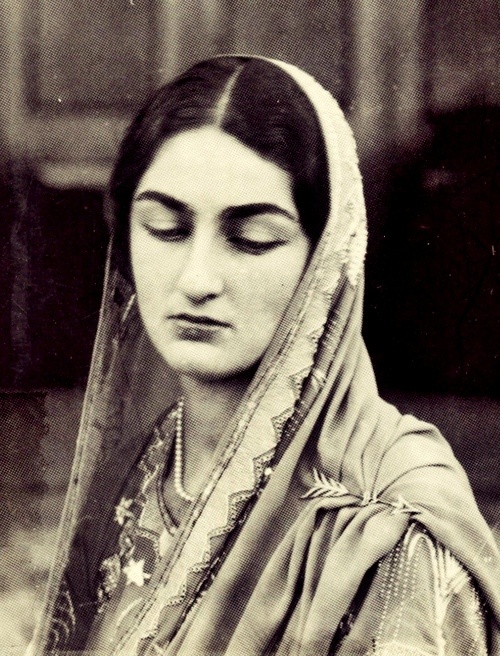
Fast forward five centuries, to the 1930s. We are now in the princely Indian state of Hyderabad, where Azam Jar, heir to the Nizam’s throne, is married to Princess Durru Shehvar (b. 1914). Her proper, Turkish name is Hatice Hayriye Ayşe Dürrüşehvar Sultan, as she is the daughter of  Abdülmecid II, the last heir to the Ottoman throne, and the last caliph.

83637a63536e121e28f53acf29f01ada


I don’t know who took the photo above, but you can see she was a strikingly beautiful woman. She died in London eight years ago, at the age of 92.

Cecil Beaton, the great society photographer, was clearly entranced by her. To judge by his portrait of Dürrüşehvar Sultan, he knew the Bellini, too.

large

I make it thirty one generations between Mehmed the Conqueror and his linear descendant, Dürrüşehvar Sultan.

That’s thirty one generations, five centuries – and one glorious nose.


Erdogan and the Janissaries

Istanbul residents have always treasured their green spaces.
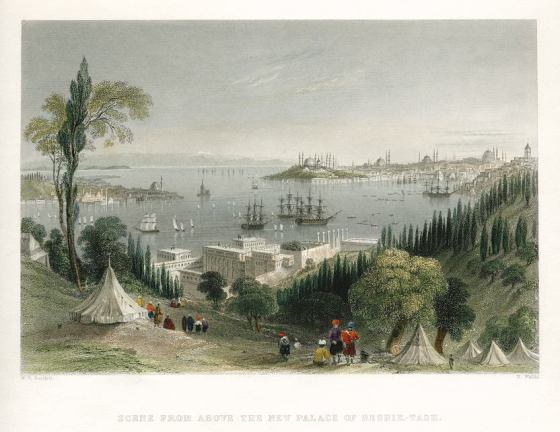
sp0081-Scene-from-above-new-palace-l

This was, once, a city of trees – ornamental cypresses in its graveyards, fruit trees in its gardens, the banks of the Bosphorus ablaze with Judas trees blossoming in the Spring. On the shore of the Golden Horn, on the Pera side, there grew an enormous plane, cut down on the sultan’s orders to clear the approach to the Galata Bridge.
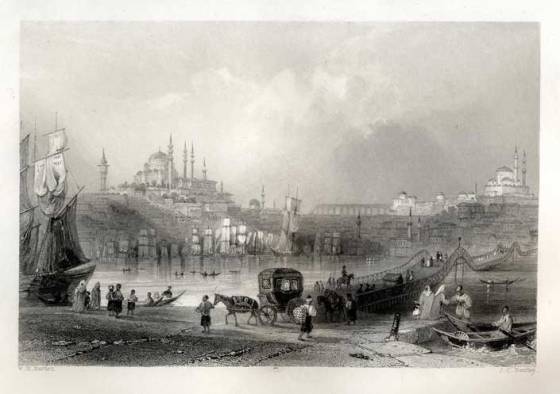
116_floating_bridge

Long before Istanbullu united to preserve the trees of Gezi Park and, by extension, to protest against the increasingly autocratic actions of Prime Minister Erdogan, I’d imagined a similar scene. In 1840, in The Bellini Card, Yashim encounters a crowd murmuring against the destruction of the great plane. The extract below is from that book, in which Yashim’s adventures take him from Istanbul to Venice.

Prime Minister Erdogan, unlike the sultan, is democratically elected, and seems to have done Turkey a great deal of good. All the more reason, then, to regret that he’s unwilling to enter into the kind of negotiation that a complex society like Turkey deserves. Liberty cannot mean majoritarian rule, as JS Mill pointed out, and there are voices and attitudes in Turkey’s modern society that should be handled with respect. As Norman Stone pointed out in yesterday’s Evening Standard, Erdogan is dangerously like another prime minister who after ten years in power came to believe that their will was identical to the will of the country. Mrs Thatcher’s term ended in ignominy.

One lesson that can be drawn from Ottoman history is that if the people require tribunes, so do their rulers. For many centuries the janissaries, despite their growing licentiousness and arrogance, performed that function: soldiers, who dominated civic society, could now and then express the popular mood. Their method was to overturn their great regimental cauldrons, and beat on them with spoons: the terrible sound of the janissaries in mutiny drifted from the barracks to the palace, and the sultan took note. Then in 1826 Sultan Mahmud II destroyed them, to a man.

Today, housewives in Beyoglu bang their pots and pans together at their windows. But Erdogan doesn’t seem to be listening.

Once the janissaries were eradicated, Mahmud and his successors were less beholden to the people. They furiously modernised the Ottoman Empire, running roughshod over popular disquiet, and collapsed unlamented in a puff of smoke at the end of World War I.

The Janissaries had their own tree, and their own traditions – and they, like the empire they served, are gone. Erdogan – like Mahmud II – still wants his mall.
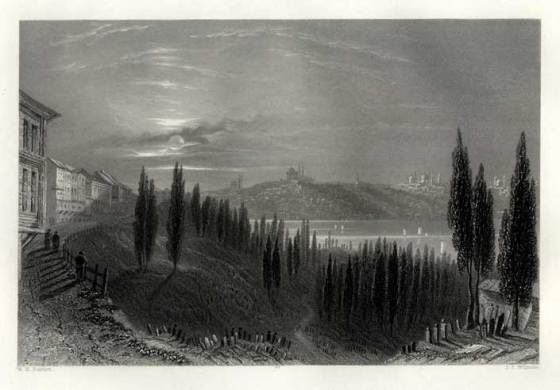
130_petit_champ_des_morts_p

Here’s the extract from The Bellini Card: note the detachment of troops in reserve.


Yashim walked slowly back to the Golden Horn, taking the steep and crooked steps that led from the Galata tower.

He was about halfway down when he became aware of a strange sound, an unfamiliar murmuring from the shoreline below.

From the lower steps he gazed out over a crowd gathered around the gigantic plane tree. Its branches cast a deep pool of shade over the bank of the Golden Horn, where the caique rowers liked to sit on a sweltering day, waiting for fares. The lower branches of the tree were festooned with rags. Each rag marked an event, or a wish – the birth of a child, perhaps, a successful journey or a convalescence – a habit that the Greeks had doubtless picked up from the Turks, and which satisfied everyone but the fiercest mullahs.

Yashim heard the distinct rasp of a saw; looking closer, he realised that there were men in the tree. There was a sharp crack, and one of the branches subsided to the ground: the crowd gave a low groan. He scanned the faces turned towards the great plane: Greeks, Turks, Armenians, all working men, watching the slow execution with sullen despair; some had tears running down their cheeks.

Two swarthy men in red shirts started to attack the fallen branch with axes, stripping away the smaller growth: Yashim recognised them as gypsies from the Belgrade woods. They worked swiftly, ignoring the crowd around them. Out of the corner of his eye, Yashim caught a sparkle of sunlight on metal: a detachment of mounted troops was drawn up beyond the tree. He hadn’t noticed them. Perhaps the authorities had expected trouble.

He looked carefully at the crowd. Most of them, he guessed, were watermen for whom the felling of the tree was a harbinger of bad times to come: what would become of them, when people could walk dryfoot between Pera and old Istanbul? But it was also the loss of an old friend which for centuries had sheltered their members from the heat and the rain, which had accepted their donations, brought them luck, sinking its roots deeper and deeper with the passing decades into the rich black ooze. No-one had turned up to witness the destruction of the fountain: that, in the end, was only a work of man. But the plane was a living gift from God.

A second branch, thirty feet long or more, fell with a crack and a snapping of twigs, and the crowd groaned again. For a moment it seemed as though it would surge forward: Yashim saw fists raised, and heard a shout. Someone stepped forward and spoke to the woodmen, still hacking at the first branch. They listened patiently, staring down at the tangle of twigs and branches at their feet; one of them made a gesture and both men resumed their work. The man who had interrupted them turned back and pushed his way out of the crowd.

Yashim watched him: a Greek waterman, who stumped away to his caique drawn up on the muddy shoreline and stood there, looking up at the sky.

Yashim followed him down the steps.

‘Will you take me across to Fener, my friend?’

‘I never thought I would live to see this day, efendi.’ The Greek hitched his waistband, and spat. ‘I will take you to Fener, or beyond.’

As they pulled away, Yashim turned his head and saw that the woodmen were still at work. Two more branches had fallen, and the tree looked misshapen; he could hear the rasp of the saw and the toc toc of the woodman’s axe. A team of horses were dragging away the first bare branches.

The rower pulled on his oars, muttering to himself.
 

Mixed Media

Why isn’t The Janissary Tree a movie yet?

After all, the locale couldn’t be faulted, could it? Who wouldn’t want to see 19th century Istanbul brought to life, from the palace to the street?

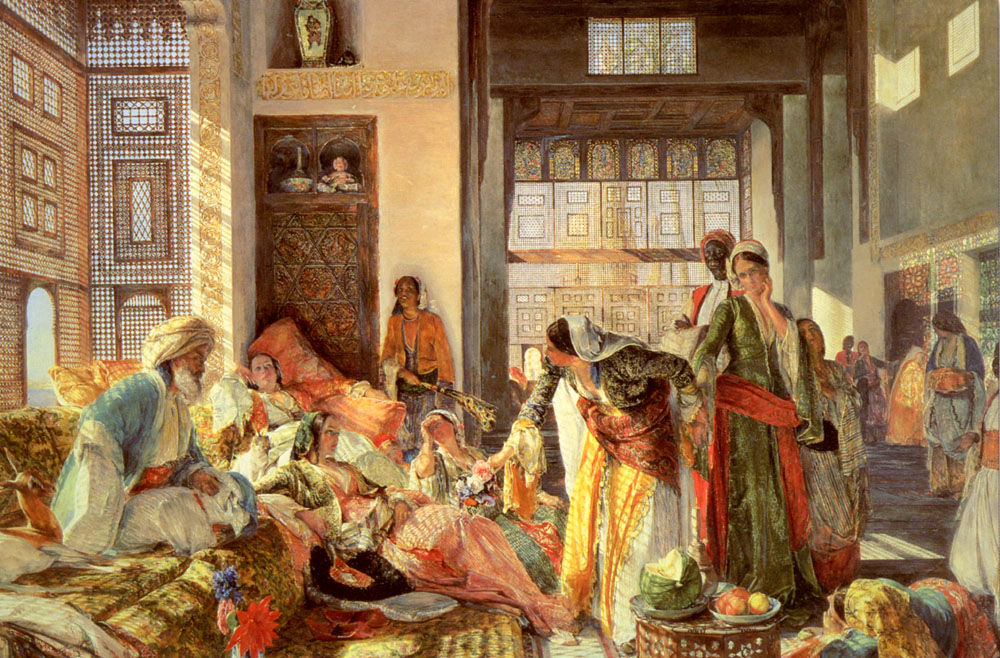
Lewis_John_Frederick_Intercepted_Correspondence

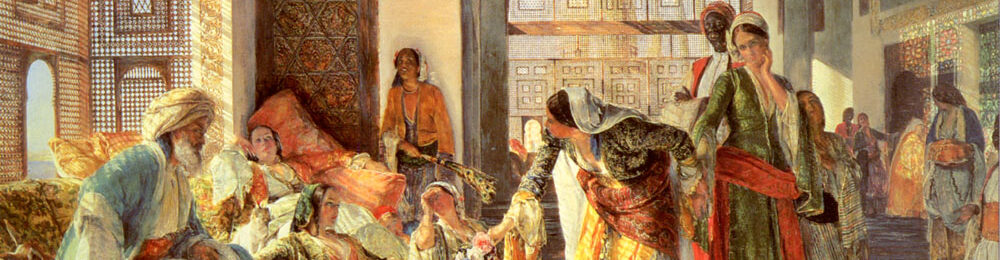
Just imagine the costume! Imagine the décor!

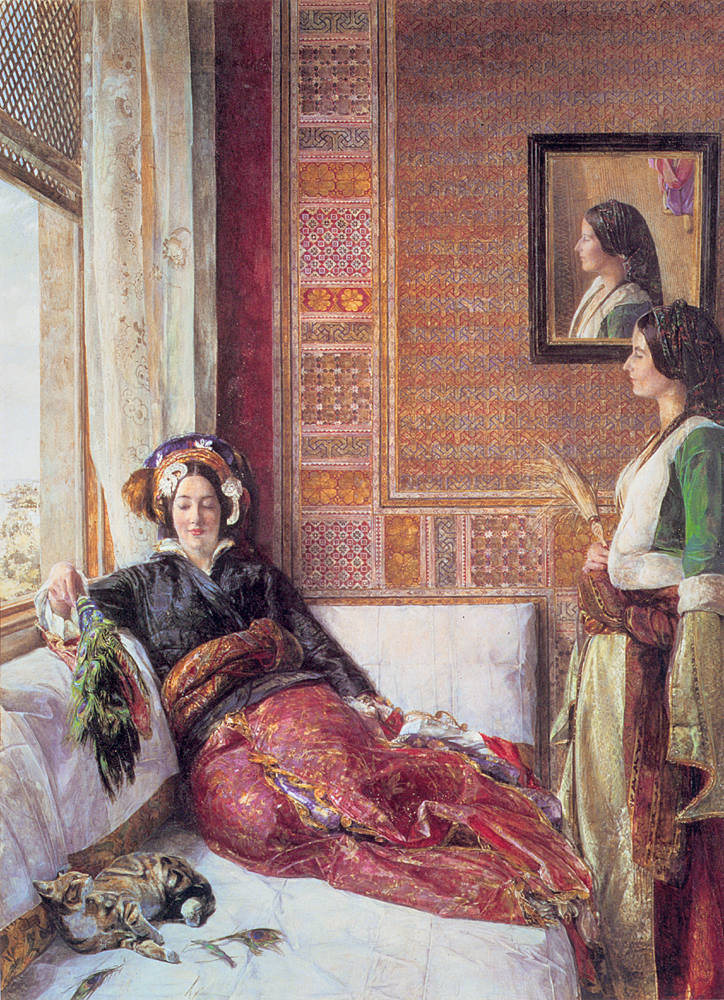
Lewis_JF_Harem_Life_in_Constantinople

Ottoman civilisation may have been crumbling, politically, but it was in full flood in the creation of beautiful and unique aesthetic, and a particular way of life.

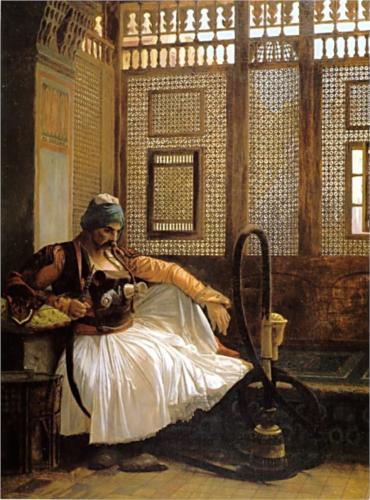
arnautm-smoking.jpg!Blog

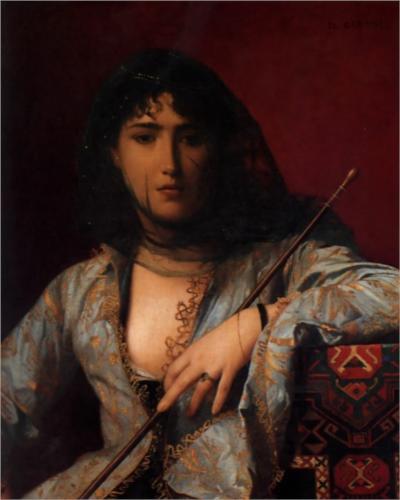
It would be gorgeous, wouldn’t it? And new: I’m rather tired of ballrooms, and chignons, and gowns. I want to see this veiled Circassian on the move:

 veiled-circassian-lady.jpg!Blog

So let’s forget the movie for the time being, and focus on the music.

Here’s an interpretation by Greg Burrows, a New York-based percussionist. He sent to to me the other day, inspired by Yashim’s adventures in The Bellini Card.

http://snd.sc/Yo1gsR

And here, if you haven’t heard them yet, are The Bookshop Band’s takes on An Evil Eye, the latest Yashim story.

http://www.youtube.com/watch?v=POrjLY3IHsA


Not Nancy Mitford

The dashing girl whose picture I posted yesterday has been identified as – among others –  Mulan, Maria Walewska (closer), Lady Hester Stanhope, Maria Lebstuck, the Contessa d’Aspi d’Istria (from The Bellini Card), Juana Galan, Lady Chatterton and the young Nancy Mitford.

No. She ain’t any one of them. And the only person who got it right so far is my sister Tabitha, who just knows a lot – but she can’t have the prize copy of An Evil Eye because she’s got one already and anyway family members are debarred from winning, as it says on the cornflake packets.

But here’s a clue or two: Stanislaw Palewski would have both known and admired her, and mourned her passing in 1831 at the tender age of 25.

Here she is, doing her thing the year she died. And that really is a clue.

Gentleman with – ouch!

A reader just wrote to me about her research into Turkish knives, especially the curved knives used for cutting up borek and baklava. She had prompted by visiting Aygun Bozdogan at Kalite Bicak, the little cutler’s shop between the Spice Bazaar and Rustem Pasha Mosque.

His collection is quite astonishing, from the tiniest shiny penknife that the Valide might wield to huge meat choppers for mincing lamb for a kebab. Obvious destination for a crime writer…

I did an interview with him a couple of years ago, with a reading from The Snake Stone:

[youtube=http://www.youtube.com/watch?v=J0hkWoJ0alQ]

Hope you enjoy this! ‘Like’ it and share it if you want…

Yashim’s Kitchen III

I don’t know if you’re having turkey this year? Or a goose? We are going for guinea fowl because they are so tasty, with a duck for the crisp skin. I quite like turkey but it makes a greasy stock, and a good stock is what you want for this pilaf.

Mehmet the Conqueror’s Grand Vizier used to serve this as a working lunch in divan, the council meeting held on a Friday. Into it he tossed a gold chickpea for some lucky pasha to discover (or break a tooth on): the Ottoman version of putting a sixpence in the Christmas pudding, perhaps.


Ingredients:

Basmati rice

Chickpeas, soaked overnight and boiled for an hour (but tinned chickpeas are pretty handy, too)

An onion

butter, salt, festive stock


Rinse the rice in cold water until the water is clear – this is to remove the starch, which would make the rice too sticky. Leave it to soak while you melt the onions in butter. When they are soft, add the chickpeas.

Drain the rice, stir it into the pan and add enough stock to cover the rice and a little more.

When the stock has all been absorbed, check the rice; it should be a little nutty, but almost edible. If necessary add a little more stock until the rice is almost done.

Now comes the strange pilaf magic: cover the pan with a cloth and a lid. Over a whisper of heat, or none, let the rice steam for fifteen minutes.

Turn the rice out into a dish, helping to fluff it out with a fork.

This rice method sounds like complicated alchemy, but it’s simple really – and it works.


The Sand-Reckoner’s Diagram

For Patty and others, who’d like to follow the action more closely…

This diagram, which figures so prominently in The Bellini Card, is an eight-pointed star inside a square. The above illustration comes from a Japanese website and it is, as far as  know, the only illustration of the Sand-Reckoner’s diagram online.

The idea that it was used as a fencing diagram, governing positions and strokes, was put to me in Hampshire some years ago. It has been on my mind ever since, not least because of its delightful name:  I was glad to unpack it for The BelliniCard.

The End

Link here to www.jasongoodwin.net.

You know your book’s done when those two words appear at the bottom of the page.

Triumph – or disaster?

I can’t tell. Sometimes I think that finishing a book is the literary equivalent of a one-night stand: breakfast is yet to come. That’s when you get to see your work in proof – the whole book set in type, like a real book. That’s often when you realise if a section of dialogue is flat, a description jars the pace of the narrative, or the story is moving too fast.

That’s when you feel like a sculptor, too, working happily on clay. It’s still yours to shape.

In The Bellini Card Yashim’s old friend Palewski, Polish Ambassador to the Sublime Porte (the Ottoman Court) is sent to Venice to track down a lost painting of Mehmed II.

I examine the proofs and I wonder – does Yashim enter this story the way I want? It’s clear, on this printed page: yes, it works. It makes me smile.

Just a few others have read The Bellini Card. And they smiled, too.