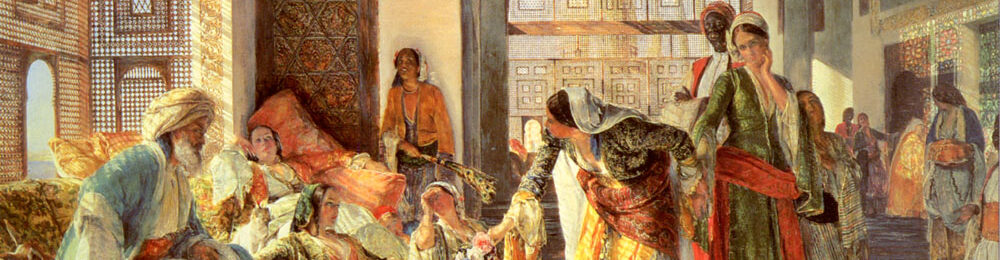
There’s no water in the streets, not at the moment, at least (for Katrina drove the water waist-high through the Quarter). No Tiepolo ever painted a Gulf sky. New Orleans has gumbo and jambalaya, bayous and levees, and the people are bigger and blacker than they are in Venice. But it is still Venice. There’s a settlement further south called Venice, indeed.
Venice is sinking. But New Orleans is receding. It was founded on the swamp created as the river deposited the Midwest into the Gulf. To secure the city against flooding, and to drive the Mississippi cleanly into the sea, they threw up the levees. As the levees funnel the river out to sea, the swamp recedes – it is disappearing at the rate of a football pitch every 45 minutes.
Only trouble is, the swamp used to absorb much of the brunt of the hurricanes. New Orleans is very exposed, and parts of it lie below sea level.
We learned this in the Katrina exhibition at the Museum, where the first sight that greets you is Fats Domino’s baby grand, dusty, flood-soaked and up-ended, just the way they found it after the hurricane passed through.
Venice became a party town in the 18th century, shortly before it lost its independence and its trade. N’Awlins has been a party town since the plantation owners started dropping downriver for the winter season; Bourbon Street in the French Quarter is still indecorous, in a beery, bland, contemporary way – no whiff, really, of the whorehouses of old, just fat men in baseball caps making a noise and holding drinks in paper cups. There are casinos – invented in Venice. For the Biennale, read the Jazz Fest; for Carnival, the month-long Mardi Gras; and we’ve turned up in the middle of the French Quarter Festival.
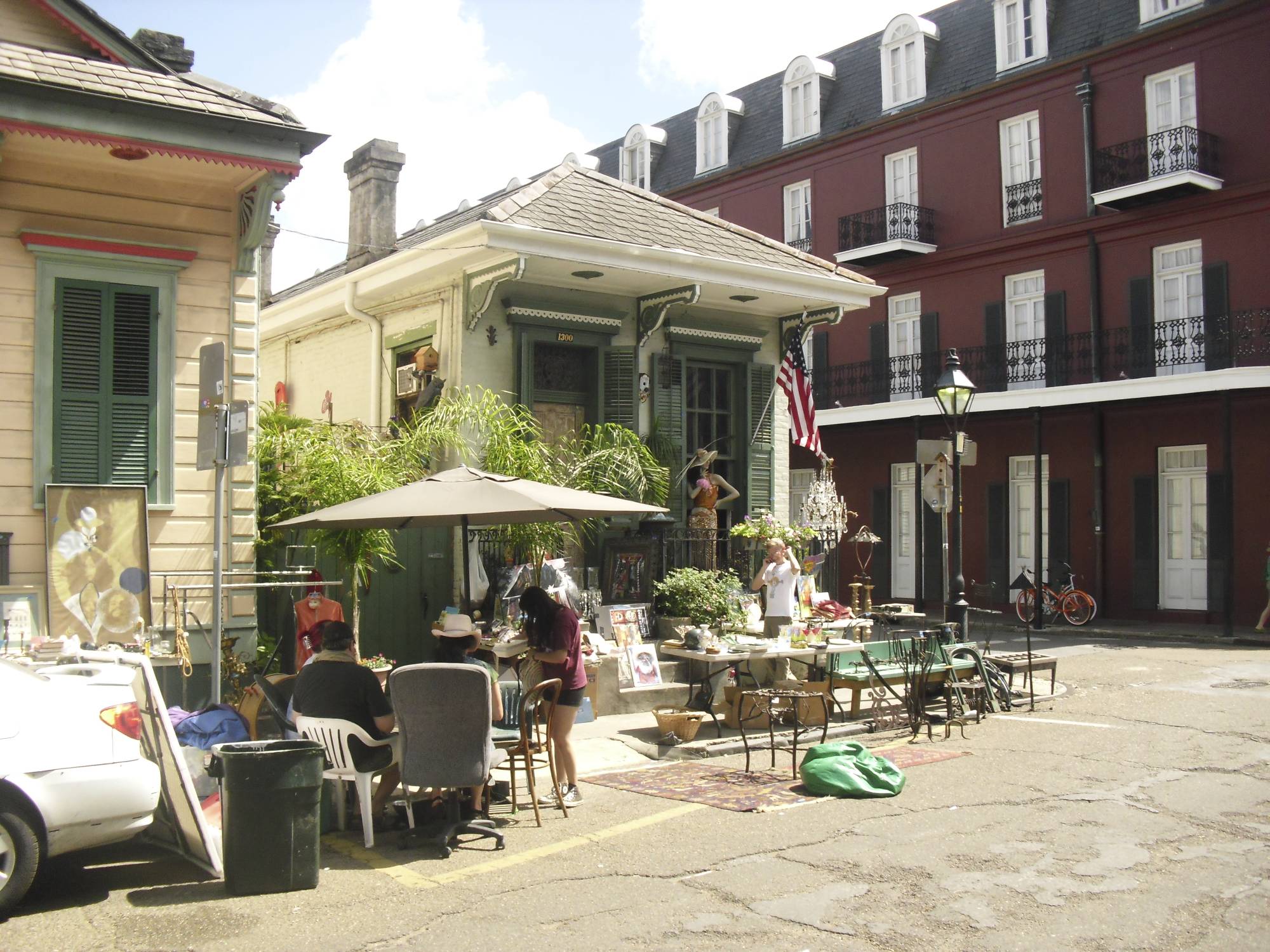
The city lives shamelessly on its past, just as Venice has done for years. Or, in Faulkner’s words, ‘The past is never dead. It’s not even past’. At Coquettes, you can have the world’s first cocktail, a Sazerac, made with rye whiskey and absinthe. You can take a ghost tour, a plantation tour, a Blues tour, a tour of the considerable architectural wonders of the French Quarter and the Garden District, full of shapely wooden and painted Victorian mansions. (Crazy the French may have been, but they knew where to build; it was the newer districts that took the force of the floods).
Is NO phoney? Well yes, when you encounter the hard unguarded stare of the bartender, the bonhomie can seem a little forced; and we walked a strip of Julia Street, one block, with a growing sense of wonder. There was a lovely old tinware store, and a grocery with piles of gleaming oranges and carrots outside, and a print-shop that seemed hardly to have changed since the beginning of the last century. Why, there were even handcarts out on the street! Even the posters looked old-fashioned.
I might have noticed the dirt on the sidewalk, obscuring the concrete and the yellow traffic lines, or the telescopic crane, parked just round the corner. Julia was set for a movie, empty for the weekend. Phoney on the outside: but movie-making is a business, too.

And one afternoon we stood to watch a band called the Vagabonds play at an intersection, white boys with matted hair and ferocious tattoos and naked torsos under their waistcoats (except for the trumpeters, who looked like escapees from a ‘60s boy band).’Raise your hand if you’re from n’Awlins!’ the guitarist cried, and a good two thirds of the audience responded.
The locals came out for the food, as much as for the music: all the town restaurants had stands, selling out po-boys (sandwiches) stuffed with pulled pork, or shrimp, and Abita beer, or frozen daiquiris in paper cups. It was an ugly crowd but a surprisingly good-natured one. Some of the people would have wedged themselves stuck had they attempted to navigate the narrower calle of Venice, and it was depressingly instructive to watch a sexless giant, in baseball cap and shorts, stacking tray after box after tray of pork ribs, cheeseburgers, po-boys in a teetering mass that climbed uncertainly from gut to chin. There’s no getting round it: in the South, some of people come with extra cheese.
On Saturday Britten (hold the cheese), owner of the civilised Garden District Book Shop, tackled the crowds who showed up for my gig: after all, why would you go to listen to top bands playing for free in the Quarter when you could take a hard chair at a book store and listen to an author talk about eunuchs? Izzy, as usual, avoided all embarrassment by sloping off to the nearest café.
Bill Loehfelm was there: we share a publisher, and he’s about to bring his detective series south from NYC to NO – a city he moved to over a decade ago, and of which he is fiercely proud. Katrina was terrible, he recalls; everyone headed out on the evacuation routes, and quite a few have never made it back (we were to meet some NO refugees enjoying themselves in Austin). But he dates the city’s recovery to the night last year when the Saints won the Superbowl, first time in 43 years, and the town went wild with joy. The old image was of people streaming out of town – and for the first time in years, everyone was pouring in, instead, high-fiving on the interstate.
